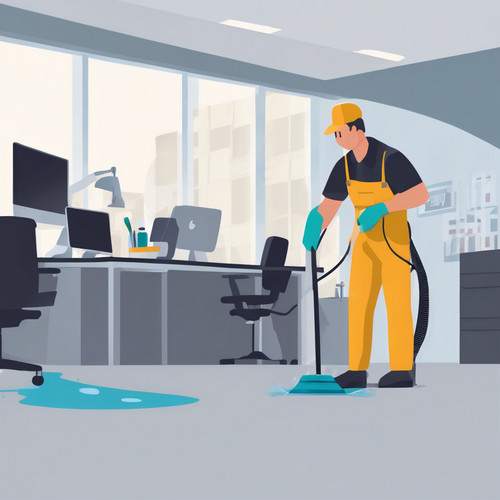
The Unsung Hero of Workplace Safety: Regular Cleaning
Every day, we march into our workplaces much like soldiers into battle, ready to conquer the challenges ahead. Yet just a few minutes spent observing the environment around may reveal a hidden adversary: dirt and disarray. Ironically, while we sharpen our minds and hone our skills for productivity, we often neglect the very foundation of a safe working environment. It’s as if we’re trying to illuminate a dimly lit room without flipping the switch—cleaning is that switch, and regular cleaning is the continuous flow of necessary light. 🧼✨
Health First: The Invisible Threats We Invite
Consider the dust particles that settle like unwelcome guests on our desks, or the germs lingering on shared equipment—each one lurking like a shadow, waiting for the right moment to pounce on our health. Research indicates that a clean environment significantly reduces the likelihood of illnesses spreading within the workplace. The CDC’s guidelines suggest that thorough cleaning and disinfection of surfaces can decrease the transmission of pathogens, marking regular cleaning as our first line of defense against workplace illness outbreaks.
“In the grand scheme of workplace wellness, the clean spaces we often take for granted are the true unsung heroes,” notes Dr. Amelia Charset, a public health expert. “Every inhabited space harbors microscopic villains that cleanliness can easily thwart.”
Productivity Unchained: The Underestimated Link
Picture this: you’re squinting at a cluttered desk, navigating around wrappers and unfiled papers, while your productivity seeps away like sand through fingers. Regular cleaning is not merely aesthetic; it is foundational to efficiency. A well-kept working environment can boost employee morale and enhance focus, acting as an antidote to the stressors of a chaotic workplace. Studies reveal that employees in cleaner settings report higher job satisfaction and productivity levels, akin to cultivating a garden where healthy plants thrive under diligent care. 🌱🪴
Creating a Culture of Cleanliness: Responsibility and Engagement
Integrating regular cleaning into workplace culture transforms it from a mundane chore into a shared responsibility. Establishing protocols and fostering a collective mindset on cleanliness encourages employees to take ownership—after all, why maintain a beautiful garden if it belongs only to the gardener? The irony lies in how employees can become embroiled in the cleaning process, finding empowerment in fostering their own safe environments.
Maintenance and Sustainability: The Long Game
Regular cleaning acts as a maintenance tool, prolonging the life of office essentials. Dirty carpets? They age three times faster than their clean counterparts. Dust-covered electronics? They might short-circuit or operate inefficiently. The dollars spent on maintaining a clean workplace turn into wise investments that pay off over time. It’s like tending to a classic car; neglect can lead to breaks and repairs that are far more costly than maintaining its pristine condition. 🚗💰
The Final Sweep: A Clean Slate for a Brighter Future
So why does regular cleaning contribute to a safe working environment? It roots out the unseen threats that could compromise health, enhances productivity, instills communal responsibility, and serves as an investment in maintenance. All in all, it shines a light on the wearisome truth that a clean environment is not an afterthought; rather, it is a necessity. As workplaces evolve, let us ensure that the battle against neglect—and all its unfortunate consequences—remains unwon. After all, in the grand tapestry of workplace safety, cleanliness is the thread that holds it all together. 🧹🌈